
The Source
Cal Nez & Politics on the Navajo Nation
≈ 5 min read · or listen, or skim the bold lines
D · Draft — not verified Not line-checked against the Navajo Nation Code. How we verify →
Every candidate interview and expert consultation on this site traces back to one man’s recorded conversations. Visitors deserve to know who is asking the questions.
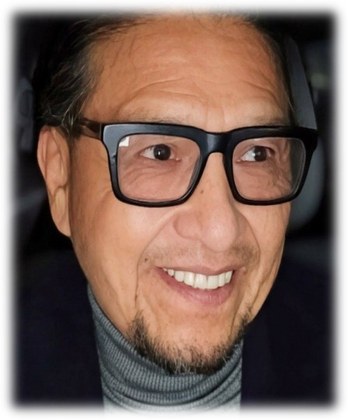
Who Cal Nez is
Cal Nez is a Diné graphic designer, businessman, and community broadcaster, and the host of Politics on the Navajo Nation — a long-running series of recorded interviews and live broadcasts where candidates, officials, and knowledge-holders answer questions on the record, at length, in their own words. During the 2026 election cycle he has interviewed dozens of candidates for President and Council Delegate, along with former and current officials on subjects like the Office of Ethics & Rules.
Where to watch and follow
YouTube
Full interviews and broadcast archives, organized in playlists.
Facebook group
Politics on the Navajo Nation — live broadcasts, announcements, and community discussion. Cal’s Ethics & Rules interviews: Cal’s interview · Cal’s interview video.
His role here
The Diné Civic Center did not conduct these interviews. Cal Nez did — his recordings are both the inspiration for this project and its raw material. This site summarizes what was said in those recordings, organizes it by topic and by candidate, and links every summary back to the recording so you can verify it yourself.
The honest line
Independence, stated plainly
Cal Nez shares his own strong views in his broadcasts — he is a commentator as well as an interviewer, and he does not hide it. That openness is exactly why this site links to every source: you can always hear the full conversation, his questions and all, and judge for yourself. The Diné Civic Center is an independent project. Cal Nez is not involved in creating, editing, or approving this site’s content, and nothing here should be read as his endorsement or opinion.
Help shape the next interviews
The interviews continue — and the community steers them. Suggest who Cal should hear from next, or submit a question you want asked on the record.
Browse the candidate interviews → · Ethics & Rules, explained →
The seven — Cal Nez’s question structure
Counted from the section headings on all 41 interview pages
Every interview opens with platform and background — who are you, what sets you apart. Then come the seven. Cal tells candidates so at the start: “all the candidates understand that they’re pretty much all the same questions about the same topic.”
- Education & schools — scholarships, Diné College, board oversight
- Health care & 638 — the 638 concept, oversight, boards
- Veterans — housing, counseling, travel, who is responsible
- Ranches & enterprises — NAPI, the enterprises, why we have them
- Economic development & the NBOA — business, procurement, Navajo preference
- The executive–legislative conflict — branch communication, gridlock, who has authority
- Government reform — Title 2, the 1989 changes, the Office of Government Development, the referendum
Six and seven are not the same question
The conflict is what happens now: two branches fighting, nobody agreeing who decides. Government reform is the unfinished business underneath it: a government built temporary in 1989 and never completed.
Across all 41 interviews, these appear as separate sections 22 and 23 times — and together only 5 times. Candidates treat them as different questions, because they are.
A further 92 sections fall outside the seven — plus the opening platform question. Cal follows the person in front of him, which is what a good interviewer does, and which is exactly why is needed if anyone wants to compare answers.
The seven, counted: What the interviews said →
A note on the transcripts
Forty-one candidate interviews exist. Thirty-nine have been transcribed. Every count derived from candidate answers on this site comes from those twenty-four. Seventeen interviews are not represented in any of them.
The transcripts are machine-generated and they do not preserve Diné Bizaad. Where a candidate answered in the language, the software produced phonetic approximations — not Diné Bizaad, and in at least one case not any language at all. The recording is the only faithful record of those answers.
The transcripts also mangle proper nouns: preference becomes “preface,” Harrison Tsosie becomes four different people, Buu Nygren becomes “Blue Niagara.”
The video is the source. The transcript is a research aid. Nothing is quoted on this site until a volunteer has heard it.
Each question, its case, and the section behind it:
Where the interviews come from — and where they do not
Every candidate interview used on this site is from Politics on the Navajo Nation, hosted by Cal Nez. No other programme’s interviews are used, in any count, on any page.
This is a rule, not a preference.
- The work is not ours. This archive exists because one journalist recorded the record and shared it.
- Mixing hosts destroys comparability. Every count on this site depends on the same person asking. A different interviewer is a different instrument.
- Other broadcasters hold rights in their own work.
Material from other programmes has been offered to this project and deliberately excluded. Every file in the archive is checked automatically for a host marker before any analysis runs.